
Watch Case Materials: Steel, Titanium, Bronze, and Gold Compared
Metallurgical characteristics, corrosion resistance, and patina evolution.
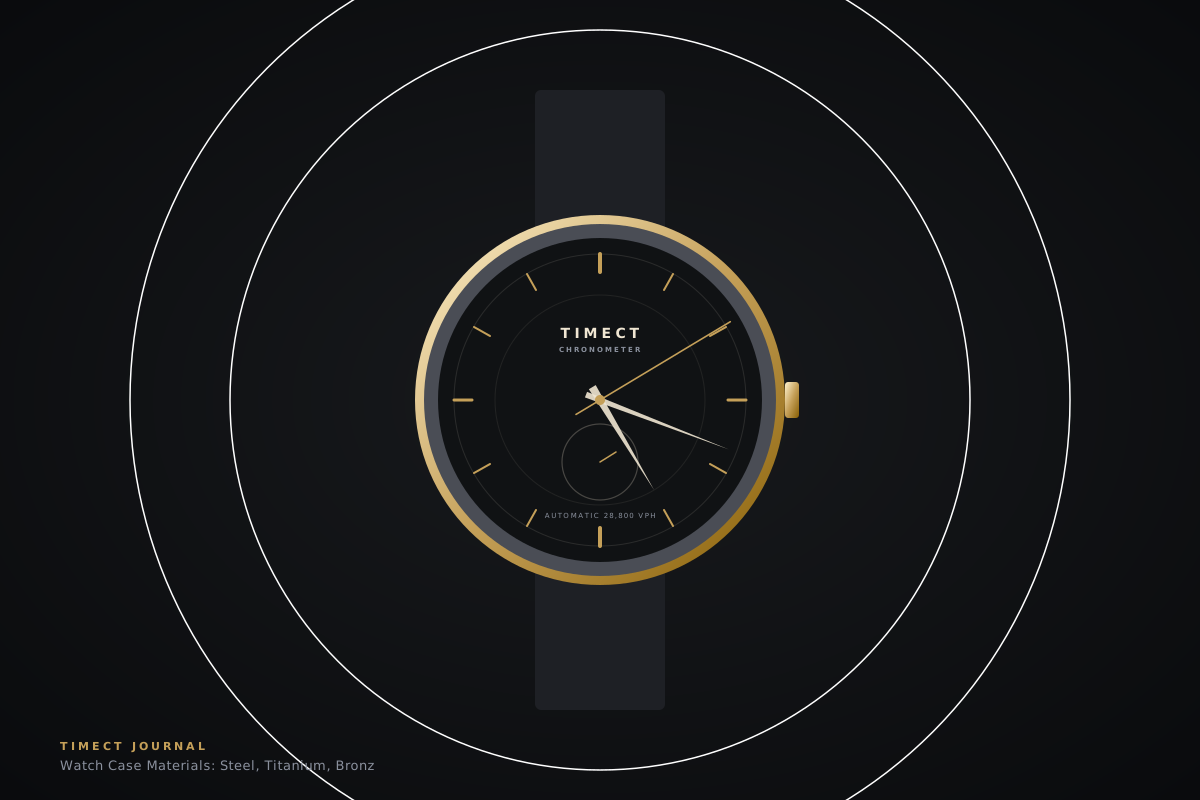
The most popular watch case materials are 316L stainless steel (the industry benchmark for durability and polishability), Grade 5 titanium (40% lighter, hypoallergenic, and scratch-resistant), bronze (which develops an organic unique patina over time), and solid gold alloys (cherished for timeless warmth and prestige).
The metal wrapping around a mechanical caliber dictates its physical weight, wrist presence, and tactile experience.
316L and 904L Stainless Steel
Austenitic 316L stainless steel contains molybdenum, giving it exceptional resistance to chlorides like ocean water and perspiration. It finishes brilliantly with brushed satin or high mirror polish.
Grade 2 vs Grade 5 Titanium
Grade 5 titanium is an aerospace alloy infused with aluminum and vanadium. It can be mirror-polished and possesses a tensile strength superior to mild steel while reducing total watch weight by nearly half.
Horological Benchmark Specifications
Engineering Tolerances
Regulated in 3 to 5 positions; isochronism variance limited to +/- 4 to 8 seconds per day.
Material Composition
Austenitic 316L stainless steel, anti-magnetic alloys, synthetic sapphire with internal anti-reflective coating.
Escapement Frequency
28,800 vibrations per hour (4 Hz) or 21,600 vph (3 Hz) providing optimal balance longevity.
Preventative Maintenance Cycle
Pressure testing every 24 months; comprehensive ultrasonic overhaul every 4 to 6 years.
In-Depth Technical Evaluation: Micro-Mechanical Nuances
When assessing watch case materials: steel, titanium, bronze, and gold compared, the true differentiator lies in microscopic finishing and kinetic efficiency. The interaction between the balance hairspring and the pallet fork gems determines whether a timepiece maintains stability over multiple decades. High-grade synthetic rubies (corundum jewels) are polished to minimize frictional drag at pivot points, while synthetic epilame coatings prevent lubricant migration away from the escape wheel teeth.
Curator's Verdict & Acquisition Advice
For both aspiring enthusiasts and seasoned collectors, understanding the architectural pedigree behind this timepiece ensures lasting ownership satisfaction. Rather than chasing transient design trends, invest in pieces characterized by proportional harmony, serviceability of internal components, and transparent manufacturing provenance.
Editor's Summary Note
Horology remains one of the few physical crafts where traditional centuries-old hand finishing merges seamlessly with modern aerospace tolerances. Treat your timepiece with regular care, keep it shielded from high magnetic fields, and it will serve as a multi-generational companion.
Common Questions & Guidance
Does bronze turn your skin green?
When raw bronze reacts with sweat, copper carbonate oxidizes on the surface. Quality bronze watches feature hypoallergenic titanium or steel casebacks to shield your skin from direct contact.
Related Articles
View All →
Materials & Craftsmanship
Sapphire Crystal vs Mineral Glass: The Ultimate Crystal Guide
Materials & Craftsmanship
The Anatomy of a Watch Dial: Guilloché, Enamel, and Sunburst Finishes
Materials & Craftsmanship
Why Ceramic Bezels Have Revolutionized Modern Dive Watches
Materials & Craftsmanship